Skip to content
Aerospace Industry — Aircraft Fuselage

Cleanrooms for

the aerospace and aviation industry

The aerospace and aviation industries impose specific environmental control requirements. The equipment manufactured—satellites, propulsion components, optical systems—represents a major investment and must operate reliably in environments that are often impossible to maintain once deployed. This reality fundamentally influences the cleanliness and control standards applied during manufacturing.

Environmental control in this sector is not limited to particles. Molecular contamination, trace metals, and microbiological cleanliness are also critical concerns depending on the specific application.

Quick Navigation

Understanding Aerospace Challenges

Classifications Vary Depending on the Application

Aerospace environments span a wide range of ISO classifications. Satellite and spacecraft assembly typically requires ISO 7 or better, often with ISO 5 zones for the most sensitive optical and electronic components.

The manufacture of engine components generally takes place in ISO 7–8 environments. The repair of composite materials for aircraft structures may require ISO 7 to ensure the integrity of resins and adhesives during polymerization.

NASA and ASTM E2352 standards supplement the requirements of ISO 14644-1, adding specifications on thermal control, molecular contamination, and, in some cases, bioburden for planetary exploration missions.

Coractive_INT_DiegoDiaz_ (32)

Beyond Particles: Molecular Contamination

For space applications, controlling volatile organic compounds is critical. Space telescope optics, sensor surfaces, and scientific samples can be compromised by even the tiniest molecular deposits.

Materials used in space assembly facilities are tested for outgassing rates according to strict protocols. Adhesives, silicones, and plastics that emit volatile compounds are avoided or strictly controlled. Cleaning procedures use high-purity solvents, and surfaces are inspected under ultraviolet light to detect residues invisible to the naked eye.

Trace Metals and Composite Materials Projects

When analyzing geological or extraterrestrial samples, even the tiniest traces of metal contamination can skew irreplaceable scientific results. These applications require rooms that are completely free of exposed metal—polypropylene doors, plastic grommets and fasteners, and non-metallic panels and finishes.

Composite materials—such as carbon fiber and fiberglass—make up a significant portion of modern aerospace structures. Their manufacture and repair require environments with controlled temperature and humidity to ensure proper polymerization of the resins.

What Shapes Our Perceptions

A
Control of Volatile Organic Compounds

For sensitive space applications, our designs incorporate a rigorous selection of all construction materials. Wall panels, adhesives, sealants, and even flooring are chosen to minimize outgassing.

Chemical filtration complements standard particulate filtration. Activated carbon or potassium permanganate filters remove organic contaminants and certain inorganic contaminants from the circulating air.

Cleaning procedures use high-purity isopropyl alcohol or demineralized water. Inspections under ultraviolet light detect organic residues that are invisible under normal light.

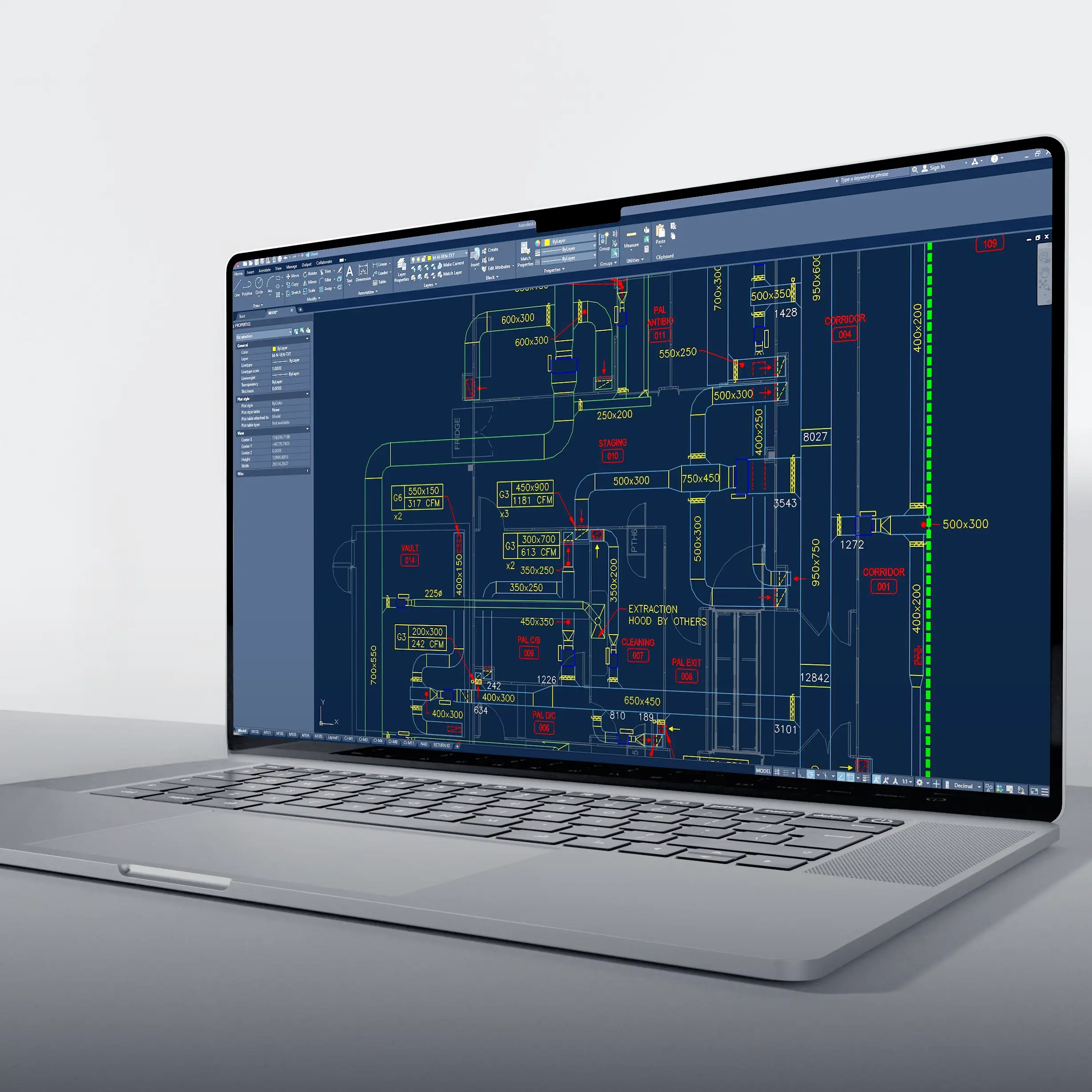
Detailed design drawings displayed on screen (CAD)
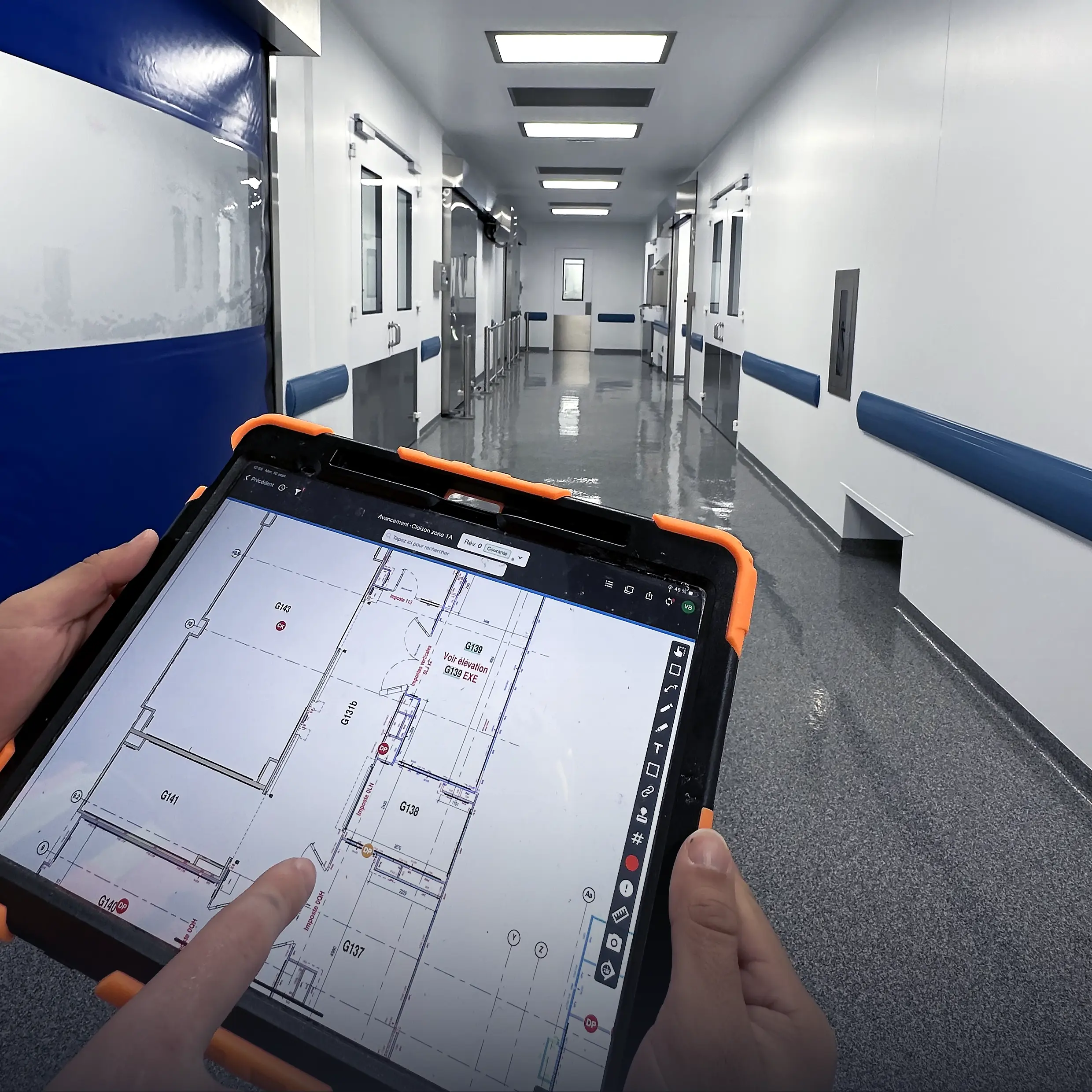
Viewing plans and specifications on a tablet in a cleanroom
B
Architecture Without Exposed Metal

For trace-metal applications, we have developed a unique architectural approach that eliminates all exposed metal in the environment. This expertise includes:

  • Polymer doors: Polypropylene or composites replacing traditional metal frames
  • Plastic fasteners: Eyelets, screws, and clips made of polymer materials
  • Non-metallic panels: Specialized composites and polymers for all surfaces

This approach requires specialized structural engineering to compensate for the lower stiffness of certain materials while maintaining the required airtightness and durability.

C
Management of Environmental Conditions for Composites

The manufacture and repair of composite materials require precise control of temperature and humidity throughout the resin curing process.

Typical tolerances are ±2°C and ±5% relative humidity. Variations can affect cure time, final strength, and the appearance of the composite. Continuous monitoring systems document these parameters for quality traceability.

Storage areas for prepregs often require refrigeration at -18°C or lower to prevent premature curing.

Detailed design drawings displayed on screen (CAD)
Viewing plans and specifications on a tablet in a cleanroom
D
Unique Logistical Challenges

Our projects include environments in exceptional settings. Setting up a trace metals laboratory on a ship in the Arctic (the Amundsen) required:

  • Resistance to motion: Anti-vibration systems and reinforced fasteners to compensate for the ship’s constant motion
  • Corrosion protection: Materials resistant to the marine saline environment
  • Extreme thermal insulation: Barriers against Arctic outdoor temperatures
  • Logistical self-sufficiency: The inability to resupply quickly necessitated comprehensive planning
E
Modularity and Reconfiguration

Aerospace requirements vary depending on the project. A facility may be used first for satellite assembly and then for the manufacture of optical components. This reality favors modular approaches that allow for reconfiguration in response to changing requirements.

Modular systems also offer portability—several aerospace facilities have been relocated or expanded without a complete rebuild, reusing nearly 100% of their components.

Detailed design drawings displayed on screen (CAD)
30 YEARS OF CLEANROOMS AND CONTROLLED ENVIRONMENTS

Projects Completed by Consab in the Aerospace Industry

The aerospace industry combines strict technical requirements, budget constraints, and tight deadlines. Our experience spans space assembly, the manufacture of optical components, the repair of composite materials, and specialized research applications. We support each project in accordance with the NASA, ASTM, and ISO standards applicable to your industry.

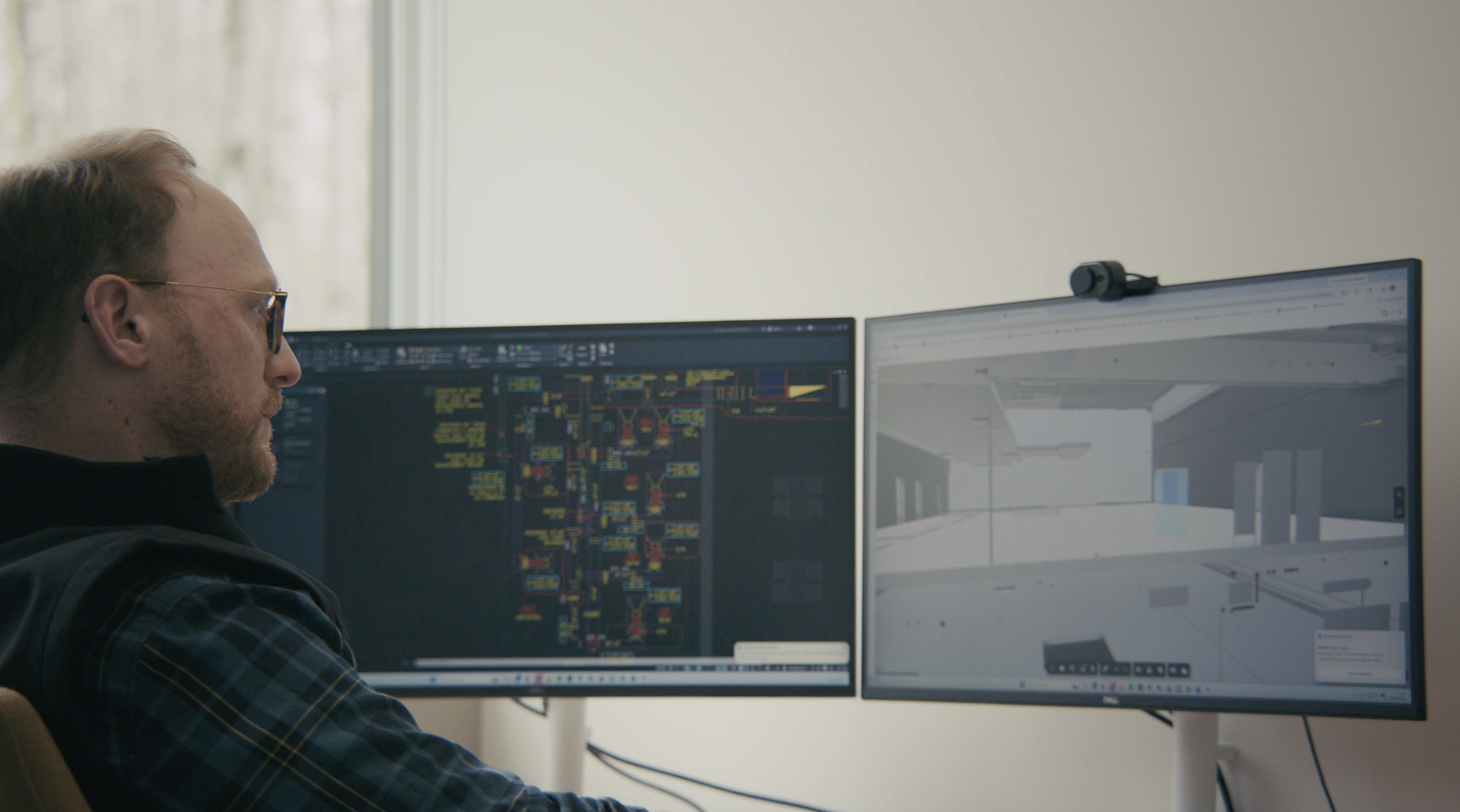
Consab expert analyzing control systems

THE CONSAB DIFFERENCE

Our strength lies in our ability to offer you unparalleled consulting services thanks to our:
Independence from manufacturers:

Recommendations based on your actual needs, budget, timelines, and technical requirements—not on a pre-determined catalog.


Integrated design-build expertise:

The ability to manage both design and construction, allowing us to anticipate on-site challenges as early as the consultation phase—helping you avoid surprises, delays, and additional costs.


Agile and personalized approach:

We offer either full-service management of your project or a more targeted approach for a specific phase.

Ready to bring your aerospace cleanroom project to life?

Whether you’re assembling satellites, manufacturing propulsion components, repairing composite structures, or developing new technologies, our team has the expertise to design solutions tailored to your most rigorous standards.