Skip to content
Medical Equipment in a Sterile Environment

Cleanrooms for

the medical industry
The medical sector requires controlled environments to ensure patient safety and the integrity of medical devices. Whether it involves the preparation of sterile medications in hospital pharmacies or the manufacture of implantable devices, adherence to appropriate cleanliness standards is central to regulatory compliance and the quality of the final product.

Medical devices are classified according to their risk level and degree of contact with the human body. This classification directly influences manufacturing environmental requirements.

Quick Navigation

Understanding Medical Challenges

Device Classifications and Associated Requirements

In Canada, medical devices are classified into four categories (I, II, III, IV) based on their level of risk. Implantable devices or those in prolonged contact with sterile tissues—such as catheters, vascular stents, joint replacements, and heart valves—generally require the most tightly controlled environments, often ISO 5 or ISO 6.

Class II and III devices typically require ISO 7 or ISO 8 environments. For critical implants or materials that are particularly sensitive to contamination, an ISO 5 environment or a mini-environment within a larger room may be necessary.

This gradation of requirements allows the level of control to be tailored to the actual risk, thereby optimizing the investment. An external dressing does not require the same level of control as an implantable heart valve.

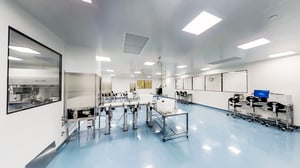
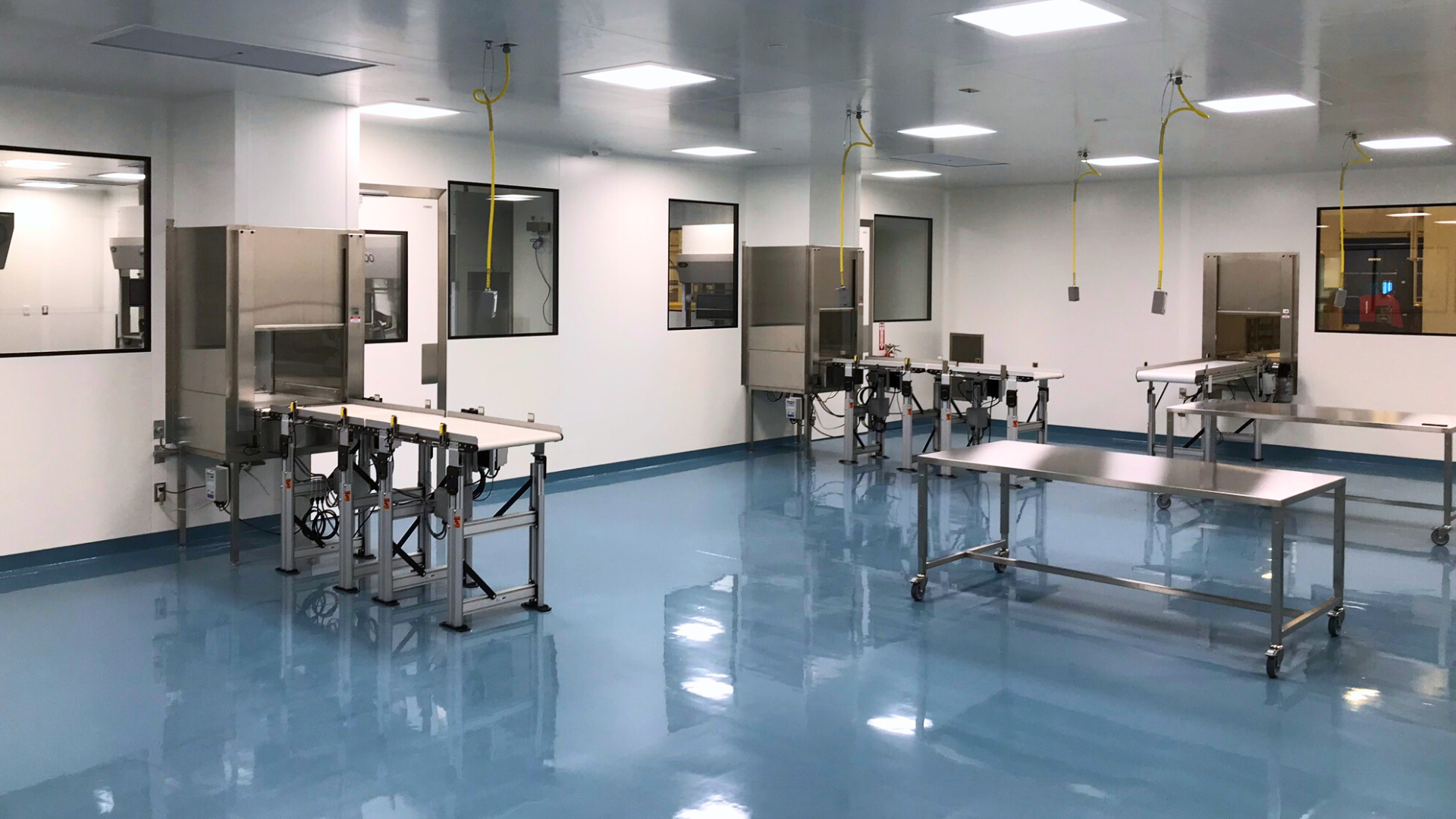
Cleanroom Completed at Fresenius Kabi

Hospital Pharmacies: Provincial Standards

Hospital pharmacies in Quebec must comply with the standards set by the Ordre des pharmaciens du Québec (OPQ) for the preparation of sterile and non-sterile products. These standards generally align with USP Chapters 797 and 800, which define the requirements for the preparation of sterile compounds.

Sterile compounding areas require ISO 5 environments (equivalent to pharmaceutical Grade A/B) with vertical laminar airflow systems, step-down airlocks, and strict gowning protocols. Non-sterile compounding areas generally operate under ISO 7 or ISO 8 conditions.

Regulatory compliance also requires protocols for environmental monitoring, staff training, and comprehensive documentation for audits.

Beyond Particles: Bioburden Control

For medical devices, bioburden control—the quantity of viable microorganisms present on a device prior to sterilization—is a critical component of quality management.

The ISO 11737-1 standard provides guidance on methods for quantifying bioburden and establishes acceptable levels. High bioburden levels can compromise the effectiveness of terminal sterilization and increase risks to patients.

Bioburden control requires an integrated approach: cleanrooms with appropriate filtration, rigorous cleaning protocols, limited product handling, and regular monitoring via sedimentation and contact plate tests.

What Shapes Our Perceptions

A
Architecture for Microbiological Control

Medical environments require surfaces that are easy to clean and resistant to disinfectants. We prioritize systems with flush surfaces, rounded corners (coving), and non-porous materials such as 316L stainless steel, epoxy panels, and conductive vinyl flooring.

This approach facilitates intensive disinfection protocols using isopropyl alcohol solutions, quaternary ammonium compounds, or, in some cases, vaporized hydrogen peroxide. The materials must withstand these agents without long-term degradation.

Eliminating hard-to-reach areas—joints, protrusions, and dead spaces—reduces potential sites for microbial growth and simplifies visual cleanliness inspections.

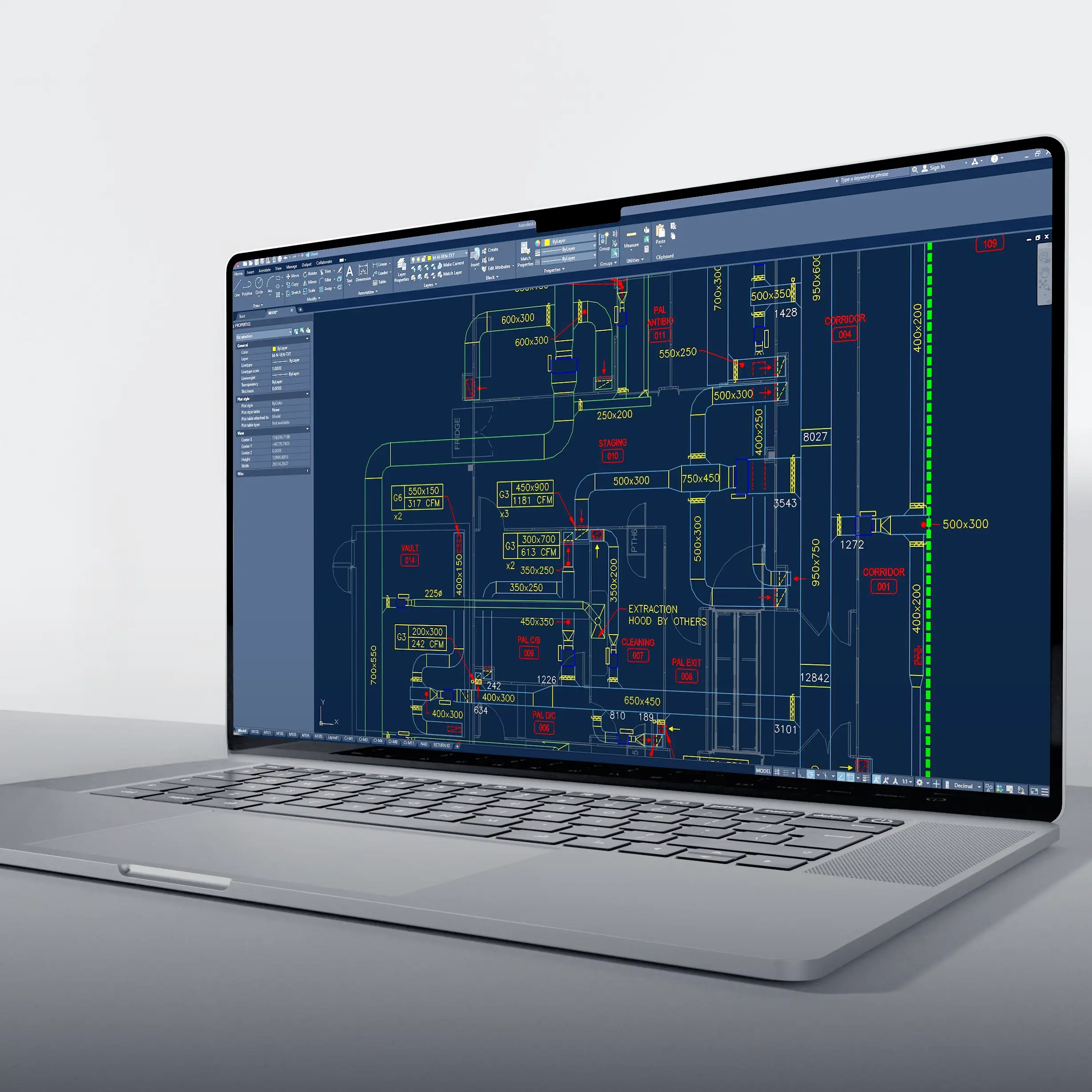
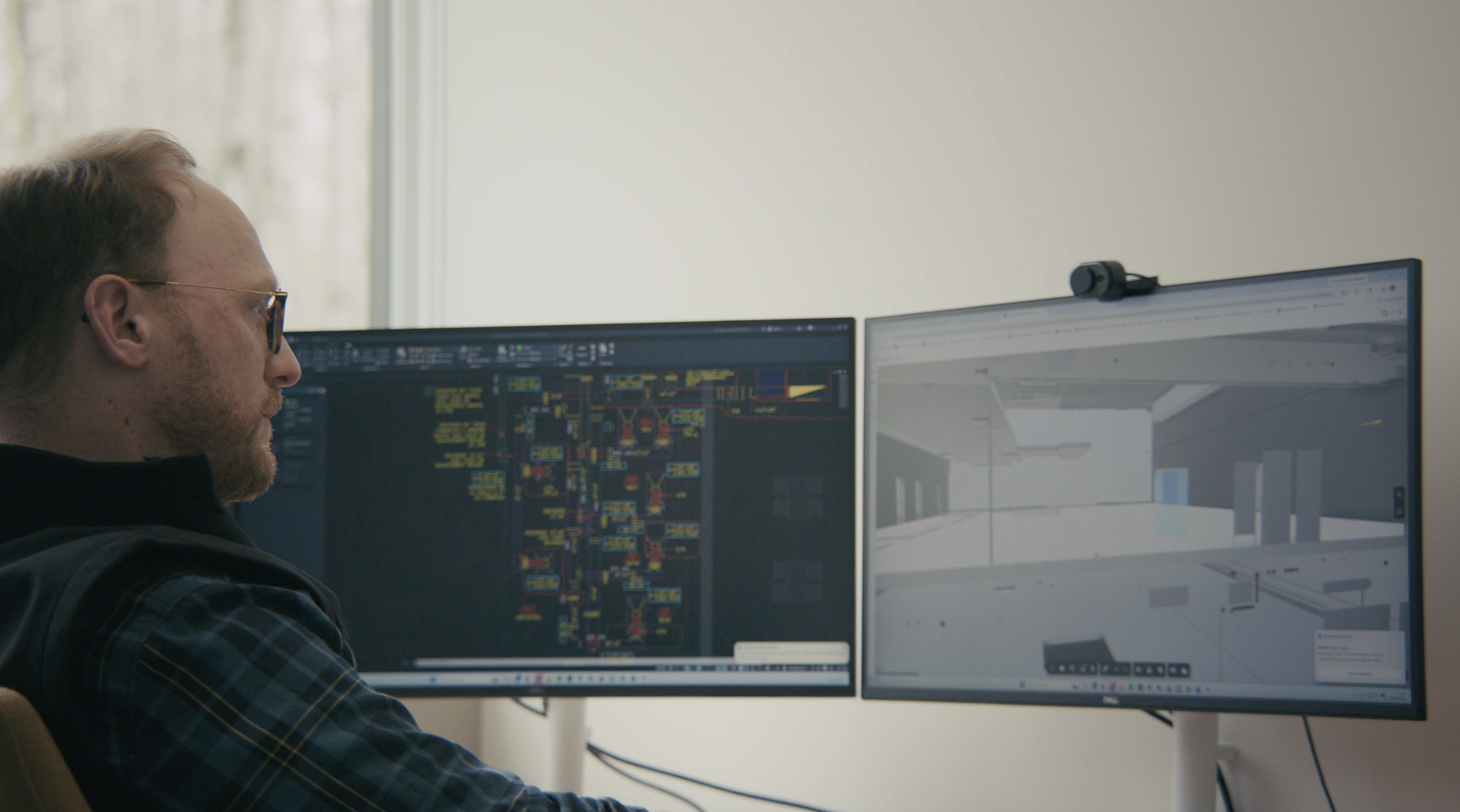
Detailed design drawings displayed on screen (CAD)
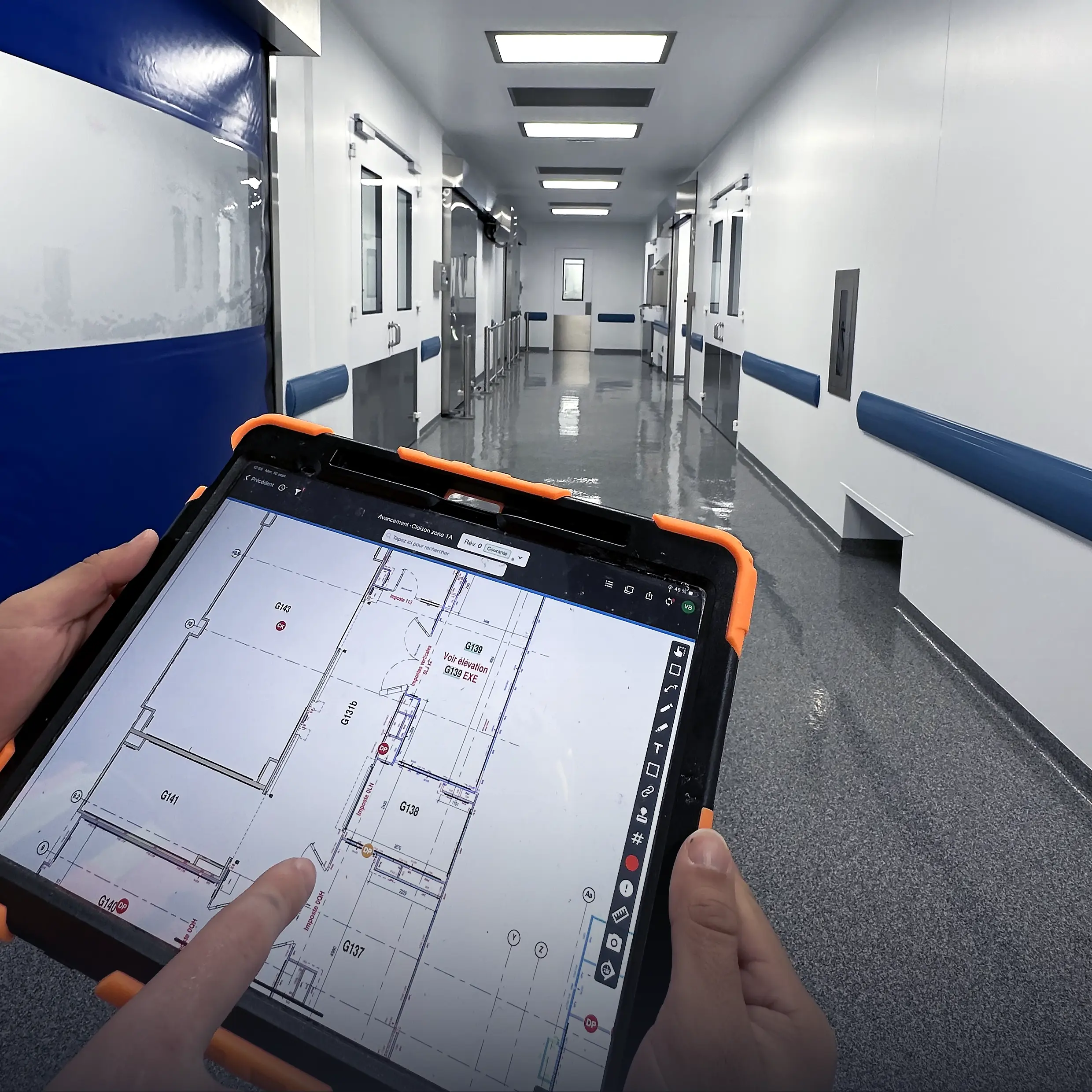
Viewing plans and specifications on a tablet in a cleanroom
B
Airlocks and multi-stage changing rooms for pharmacies

Hospital pharmacies generally use a tiered approach in their donning protocols. A first zone is designated for removing street clothes and handwashing; an intermediate zone (ISO 8) is used for partial donning; and a final zone (ISO 7) is used for complete donning before entering the ISO 5 environment.

This tiered approach creates a progressive barrier against contamination. Each transition reduces the particulate and microbial load, thereby protecting critical sterile preparation areas.

Material airlocks (pass-throughs) allow supplies to be introduced without compromising environmental integrity. These systems typically include interlocking doors that prevent both sides from opening simultaneously.

C
Scalability for Growth

We have helped several medical device manufacturers expand their production capacity. For example, expanding a catheter manufacturing room from 500 to 3,000 square feet while maintaining ISO 5 classification requires careful planning.

This scalability relies on an infrastructure initially designed with room for growth—HVAC, electrical, and plumbing systems capable of handling future loads. Modular designs also allow for additions without disrupting existing operations.

The rapidly evolving medical market—new products, increased demand, acquisitions—justifies this flexible approach from the initial design phase.

Detailed design drawings displayed on screen (CAD)
Viewing plans and specifications on a tablet in a cleanroom
D
Materials and Finishes for Durability

Medical environments undergo frequent and intensive cleaning cycles. The materials selected must withstand this repeated use without visible or functional degradation.

Surfaces must be non-porous to prevent liquid absorption and microbial growth. Joints and sealants must be compatible with the disinfectants used. Finishes must prevent cracking, chipping, or discoloration that could compromise visual and functional cleanliness.

This durability reduces long-term maintenance costs and ensures that these environments maintain their performance over decades of use.

E
Monitoring and Documentation

Regulatory compliance in Canada requires continuous monitoring of critical environmental parameters. Building management systems record temperature, relative humidity, and differential pressure, with alarms triggered for deviations.

Particulate and microbiological monitoring follows protocols defined based on the room classification and the type of product being manufactured. The results are documented and retained for regulatory audits.

For device manufacturers, ISO 13485 compliance requires quality management systems that document all aspects of contamination control.

Detailed design drawings displayed on screen (CAD)
30 YEARS OF CLEANROOMS AND CONTROLLED ENVIRONMENTS

Projects Completed by Consab in the Medical Sector

The healthcare sector combines strict regulatory requirements, quality standards, and budgetary constraints. Our experience spans hospital pharmacies, the manufacture of implantable devices, the packaging of sterile products, and quality control laboratories. We support every project from initial design through final validation.

Consab expert analyzing control systems

THE CONSAB DIFFERENCE

Our strength lies in our ability to offer you unparalleled consulting services thanks to our:
Independence from manufacturers:

Recommendations based on your actual needs, budget, timelines, and technical requirements—not on a pre-determined catalog.


Integrated design-build expertise:

The ability to manage both design and construction, allowing us to anticipate on-site challenges as early as the consultation phase—helping you avoid surprises, delays, and additional costs.


Agile and personalized approach:

We offer either full-service management of your project or a more targeted approach for a specific phase.

Ready to bring your medical cleanroom project to life?

Whether you’re planning a new hospital pharmacy, expanding manufacturing capacity, or ensuring regulatory compliance, our team has the technical expertise and industry experience to support you.